X

Is jewelry art? I think you know where I stand. But I’d love to know where you do—drop a comment below. And if you’re new here, welcome. There’s always more to discover.

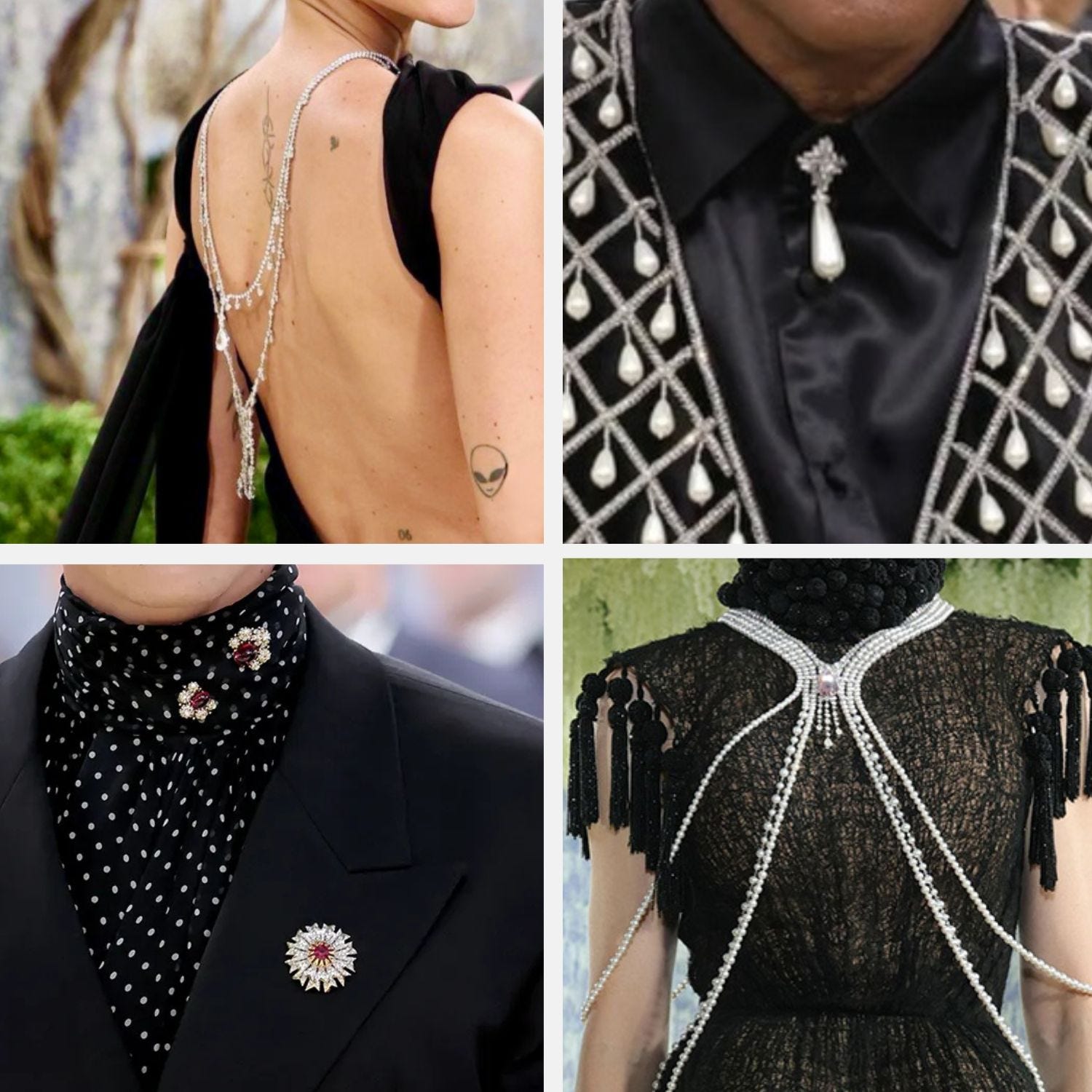
Fashion is art, according to the Costume Institute at the Metropolitan Museum of Art — but what about jewelry?
Among the museum’s seventeen curatorial departments, there is no dedicated department for jewelry. As a result, its jewelry collection is dispersed throughout the museum, scattered among various departments and galleries: small sprinklings here and there, often difficult to locate and even harder to properly see. Some of the Met’s remarkable Etruscan granulation pieces, for example, are displayed beside a fire alarm near a second-floor staircase exit.
Even more troubling is the manner in which jewelry is often exhibited. Greek earrings and Baroque pearl Renaissance pendants, for instance, are pinned flat against a wall, stripped of dimension, movement, and intimacy. Jewelry is rendered archival rather than alive. These objects were created to inhabit space and the body – and when they are flattened behind glass, they become nearly impossible to appreciate as sculptural works in their own right.
If fashion merits recognition as art, then jewelry surely does as well, right? Yet jewelry remains curatorially homeless: understudied, inconsistently displayed, and too often treated as decorative supplement rather than cultural expression. When every department is responsible for jewelry, in practice, no one truly is. Jewelry is art. And we need to support it in the same way the Costume Institute does fashion.
X
Is jewelry art? I think you know where I stand. But I’d love to know where you do—drop a comment below. And if you’re new here, welcome. There’s always more to discover.